
ב"ה
Here's My Story

Sort By:
 Page of 3

I knew that the Rebbe encouraged this practice, but I asked myself: “When the Rebbe says to recite Chitas, does he really mean me? Shouldn’t I first learn more and begin to study Tanya once I can better understand it?”
|

Then the Rebbe asked me to do something for him: “My heartfelt request is for you to give my blessing to each soldier, not just to the “religious soldiers” as you refer to them in your letter.”
|
|
Dr. Weiss often told me how the Rebbe took a personal interest in my health condition, asking him “How is your favorite patient?” and discussing with him my heart rate and other aspects of my condition.
|
“Go back to the university and make sure that everything you study takes you to G-d. See G-d in all that you learn. If you don’t, then search harder. But make sure that you only focus on the things that take you to G-d.”
|
|

I wrote a very self-righteous letter to the Rebbe, complaining, “I’ve decided to keep Torah and my husband won’t cooperate. But isn’t it true that I must do it despite what he says?”
|
The Rebbe understood the human condition from the essence of an autistic child to the voice of a singer, and especially a cantor’s power to both honor G-d and to uplift the prayers of others.
|
|
The Rebbe’s caring and wise advice guided me on a proper path. As my mother would say, the Rebbe always knew best.
|

I can’t help but be amazed at the Rebbe’s vision. He had no qualifications in bacteriology or molecular biology but he anticipated – by at least four decades – these developments in modern science.
|
|

Both your physical and spiritual needs can be satisfied by following the Torah. If you follow the Torah, it will be your healer.
|

“Which mitzvah can unite all Jews in an ongoing way?” the Rebbe asked, answering, “The mitzvah to write a Torah scroll … especially a Torah scroll written on behalf of innocent children.”
|
|

On the road returning from the Ohel, the Rebbe asked me if it would be possible to mint a silver coin that he would be able to give out during the parade.
|
Just as gold, which has many uses, was really created for Temple service, so too, broadcast technology has many uses, but was really created to spread Torah.
|
|
I remember Rabbi Simpson coming down the stairs with the Torah scroll in his arms, and the Rebbe coming down behind him carrying a big box. Nobody had any idea what was in that box and, of course, we couldn’t help but wonder.
|

The Rebbe always found a way to direct the conversation toward practical applications, so that nothing would remain just talk, but be put to use out “in the field,” so to speak.
|
|

I vividly recall the Rebbe saying that some people are telling him that now is the time to rest, take it easy and retire, but he believes that now is the time to begin work with ever greater vigor.
|

The Rebbe explained that he had seen what happened earlier in the day and that my father should reassure his wife – the little girl was not injured in the fall and would be fine, the Rebbe said, because when a child falls an angel puts out his hands as a cushion.
|
|
What amazes me is that the Rebbe had plenty to do leading his own community, yet he took on the additional responsibility of rescuing the Jewish children of Iran.
|

“I tell you something,” he said, “Chabad chasidim think they know their Rebbe, because they hear his Torah lectures and they see his greatness. But as much as they think they know him, they don’t.
|
|
The Rebbe immediately reminded me that the Talmud speaks of a man named Nakdimon ben Gurion. “And so, whatever [Prime Minister] Ben Gurion should have accomplished, you will have to make sure to fulfill.”
|
I recall coming into the Rebbe’s office and seeing him seated behind his desk, as he spoke to me. “You’re Yankel Ackerman,” he said, “you’re the editor of the newspaper in Newark.”
|
|
The Rebbetzin’s response to a little boy who didn’t realize that he was committing a faux pas was brilliant, “Richtig, richtig. Aleh chasidim zeinen di Rebbe’s kinder – You are correct. All the chasidim are the Rebbe’s children.”
|

We all need to fulfill G‑d’s intention for which we were created, he stressed. But regardless of our abilities, we are obligated in all the mitzvot, and in particular, we are obligated to study Torah.
|
|

After a while, the Rebbe took a break in the discourse, so with great excitement my grandfather got up and announced to all those gathered, “G-d has helped us! We have a Rebbe! Let us all say l’chaim to the new Rebbe!”
|
One of the things that impressed me the most was the fact that the Rebbe didn’t try to give me direct advice. He listened carefully to me, and when he did present his opinion, he did so respectfully and with humility.
|
|

The Rebbe said nothing about my failure to abide by the condition he had previously imposed, and with a big smile, gave a beautiful blessing that my uncle would be allowed to leave.
|
He continued, reinforcing his point: “Sometimes in life, you have to go back to go further forward, and to reach higher spiritually.”
|
|

Initially, I was reluctant to write. To begin with, I was not a Lubavitcher chasid, and I thought that the Rebbe must get letters from all over the world, so would he have the time to answer me?
|

I wrote to the Rebbe to ask if I should quit and become a full-time Chabad emissary instead. The Rebbe’s response to my question about quitting was just one word: “Why?”
|
|

“Over the course of your career, you will have many opportunities to help the Jewish people, and you should never miss any opportunity to do so.”
|
||
Again I started to leave, but again the Rebbe called me back. “Is this an original?” he asked. I replied that it was, to which the Rebbe responded, “I can’t keep an original, but when you make a print please send one to me.”
|
||
The Rebbe then suggested that I recite several passages of the prayer book slowly, with great intensity. The rest of the prayers could be recited at a more regular pace.
|

It got to the point that every morning I would receive about two hundred answers for people all over Israel! I would begin making phone calls early in the morning and keep calling until two in the afternoon.
|
|
The only way an educator will succeed in advancing children spiritually is by using kindness, closeness and friendship. “We must always emphasize the positive, to encourage, to empower and uplift,” he said, “because every good word will eventually produce fruit.”
|
||
I believe he wanted me to know both that he approved and also that violating Shabbat even for a good reason should not be taken lightly. It is never simple or straightforward. Still, his constant support meant a lot to me.
|
||
To my surprise, the Rebbe said that he would donate the entire sum, but he set a couple of conditions – one was that the local rabbi agreed, and another was that a proper contract would be drawn up by a lawyer, ensuring that the building would, in fact, be used for the intended purpose and that it wouldn’t be used for any activities that desecrated Shabbat.
|

If you are such an egoist, you should use this trait as a lever against itself. For example, if you see someone learning better than you, you should say to yourself, ‘I can certainly learn better than that,’ and then go and do it.
|
|

One Sunday morning in the fall of 1971, Rabbi Ephraim Piekarski, another emissary in town, got a call from Rabbi Binyomin Klein, the Rebbe’s secretary, saying that “since building a mikveh in Long Beach is very important, in order to encourage it, the Rebbe is sending an advance of one thousand dollars for this project by special delivery.”
|
||
I later learned that the Rebbe instructed the yeshivah director to keep me on even though he had wanted to throw me out. So I stayed and continued my studies without any further confusion.
|
||

In that momentous conversation, Reb Yisrael told my brother another astonishing thing – “I have not stopped reciting Chitas for the past forty years. And I certainly intend to continue.”
|

The Rebbe wanted me to go to Mr. Zarubavel – a man with a strong and assertive personality who often expressed animosity toward religion – and tell him in the Rebbe’s name that now was the time for him to change his attitude.
|
|

[The Rebbe] suggested that we ask public libraries to establish a section for Torah literature. This way, the general Jewish public will chance upon these Torah books and be exposed to their message.
|

The Rebbe implied that he received so much bad news – certainly, people wrote to him constantly about problems with family, health or with livelihood – that he craved good news.
|
|
The Rebbe suggested that I write down all that I had told him. He said there is a lot to be learned from the lives of righteous people – such stories penetrate the hearts and seep into the soul, and sometimes influence the readers even more than words of Torah.
|
[The Rebbetzin] looked at me as if she was surprised by my statement, but she answered, “All the people in this community are our children. We are responsible for a lot of people.”
|
|

It is normal that no individual, however proficient he is in Torah and mitzvot, and however educated he is, isolate himself from others from whom he can learn a better and deeper understanding of Torah, at any rate, in those areas where he has not yet attained the highest level. This is the function of a Rebbe,
|
||

“you have an opportunity to be a positive factor in
You have an opportunity to be a positive factor in spreading and strengthening Yiddishkeit in your surroundings, by showing a living example as well as by participating in activities of promoting Yiddishkeit, whereas relocating in another place would, for a time at least, take up most of your attention and efforts in getting acclimatized and adjusted.
|

“When a newcomer comes to shul,” the Rebbe said, “he already feels at home as a Jew. There he makes new friends and, as relationships develop, he gets invited to the homes of neighbors for tea, and this is how connections between people begin to form.”
|
|

If you speak sincerely and you speak with passion, your message will enter the hearts of others, if you really want to see the effect of your words, then you must speak about practical things.
|
||

We did it because the Rebbe said to do it, and we were followers of the Rebbe. And despite all the predictions to the contrary, despite our own worst expectations, the business succeeded.
|
“A foundation of the Torah and mitzvot is the idea of Divine Providence over every single person, (and especially as explained in chasidic teachings). So how can there be room for worries?!"
|
|
To look into this holy man’s eyes was something I couldn’t put into words. To be in his presence, I had a feeling that was simply indescribable. He looked at me and through me, and I felt on a totally different plane.
|
[The Rebbe] told me to take a break. He recommended that I choose one of my projects and put the others on hold for a few months. He also told me to give my full concentration to whatever task I was doing – that is, I should never be doing one thing while thinking about the other things I need to do next.
|
|
The Rebbe’s love for these young students and his letters of encouragement were uplifting, inspiring and truly amazing. I have no better words to describe it.
|

A person’s livelihood depends exclusively on the Holy One Blessed Be He, connecting with his Torah and mitzvot now are a great way to help you earn a living later on, while leaving the tent of Torah too early will only disturb this.
|
|

[The Rebbe] began by saying, “The Talmud, in Tractate Brachot, discusses the truth hidden within dreams. In your dream, the field represents your life. And in that field is a treasure that you are looking for.
|

Begin explained that [he believed that] the Rebbe had lifted up a whole generation after the Holocaust – he helped the Jewish people believe in themselves again.
|
|
When the Rebbe saw this, he came around his desk and picked him up, and the rest of the time, I spoke with the Rebbe with Hillel sleeping on the Rebbe’s lap.
|
"Heaven forbid!” the Rebbe exclaimed. “Even when a Jew sits in Brooklyn, he does not lose his love for Israel!”
|
|

The Rebbe looked at us and said in Yiddish, “The influence of a Jewish day camp can leave a longer-lasting impression on the life of a child than any other events that take place during the whole school year.”
|
||
Today, as a rabbi, I do everything in my power to spread the message of Judaism as the Rebbe wants me to. When people ask me why I do what I do, I simply tell them that G‑d gave me a second chance at life through the Rebbe’s blessing, and I want to do the same for others.
|
||

He called himself my “friend” and I was elated. I was a fourteen-year-old boy with no father, and suddenly I had a friend in the Rebbe. It was truly amazing.
|

The Rebbe responded with a blessing that the pregnancy should go well and that I should have a healthy baby. He also recommended that I strengthen my trust in G‑d.
|
|

"The hour that this boy learns in Melbourne, along with teaching others, will bring him as much success as if he had learned one-thousand hours.”
|

But this time he [the Rebbe] said, “Put this one in your pocket and keep it.” And then he took out another ten-dollar bill and said, “This one you can sell to the chasidim outside.”
|
|

The Rebbe asked what I was doing in this regard, [finding a match]. I responded that my rabbis in Kfar Chabad recommended I start looking after Passover. To which the Rebbe responded, “It is now a whole week after Pesach, and you have not yet done anything about it?!”
|
The Rebbe listened carefully to my husband and then had his secretary call me to say, “The Rebbe doesn’t want you traveling on buses right now. And he doesn’t want you to wash the floor anymore.” He was so concerned for me, for my health, now that I was pregnant at last.
|
|

Today, there are about thirty or maybe even forty families who keep kosher, who keep Shabbat as a result of Ryan’s illness and recovery.
|
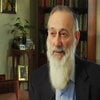
Now I finally understood what the Rebbe knew all along – that with my degree and my reputation as an Aristotelian scholar, I was in a position to have a major influence on other Jews. In fact, I didn’t even have to open my mouth – just being who I was, a respected philosopher who was religious, spoke volumes.
|
|

The Rebbe told me that every day before prayers, I should read a Chasidic teaching. “It’s not important how long it is, or whether it’s simple or complex. You could even recite something which you know by heart. What’s important is that you take it seriously, not do it by rote.”
|

The Rebbe – with a big, radiant smile on his face – raised his hand upwards and said, “The One Above will send it down from heaven.” And then he moved his hand slowly in a downward motion. My father understood that gesture as bringing down G‑d's blessing.
|
|

It is an incredible story, but there is more to it. The Rebbe didn’t just open my physical eyes, he opened my spiritual eyes. I was exposed to the beauty of Chabad teachings and, at age twenty-three, I became a Lubavitcher chasid.
|

The Rebbe gave us this blessing: “May you create a home where all kinds of Jews will love to visit. At your home they will be drawn to Yiddishkeit, and, as a result, their lives will be enriched and, because their lives will be enriched, so will yours.”
|
|
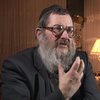
When the Rebbe read my letter, he answered: “You should finish your doctorate.”
“But there is so much ‘apikorsut’ (heresy) that I have to read and write about,” I protested.
At that the Rebbe said, “You should write all the footnotes you need. And then” he added with a big smile, “you should do Teshuvah.”
|
||
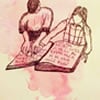
The Rebbe then asked, “What do the women do during this time? ”Dov answered that the women were in the kitchen preparing the third meal of Shabbat. “Dov, that’s not good enough,” the Rebbe replied. When Dov came home from his audience with the Rebbe, he informed me: “Alice, the Rebbe said that the women must study too, so you must teach a class to the women.”
|
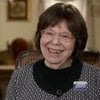
“Yes, they went to doctors but the doctors said that they can’t have children.” At that, the Rebbe laughed. He threw back his head and he just burst out laughing. Then he said, “They will have children, and they will have healthy children.”
|












Sort By:
Page of 3


Programs