

ב"ה
Sages & Mystics
More classical Jewish stories
62 items in this section
Sort By:

He dressed in worn-out clothes, packed a loaf of bread and a few books into a beggar's sack, took a walking stick in hand, and quietly left Ostroh.
|

Terrified that robbers might attack, the Bedouin guide slunk away from the group and hid among the rocks. From there, he watched Rabbi Yosef Chaim and his companions.
|

When a valuable coin was exchanged, a life was ruined. Who was to blame?
|
Putting Right a Broken Engagement
“Sadly, my father-in-law-to-be lost all his wealth. As a result, we broke off the engagement.”
|

Suddenly a strong gust of wind blew open a window and knocked over a jug of milk on the sill. It spilled into the large pot of meat that was cooking on the stove.
|
The whole program fell apart, the communal prayer was canceled, and everyone ended up praying as usual in their respective synagogues.
|

I decided that if this city has such fine, humble, generous folk, how could I ever think of stopping to serve?
|
The beggar blessed me that the barrel would not run out until the final feast celebrating my youngest son’s wedding.
|

The story of the pious peddler who had come from his grave to help a poor widow.
|

“Suddenly, I saw an angel walking toward me. It blocked my way forward, and began to drag me back out of Gan Eden!”
|
The men of the chevra kadisha were not inclined to believe him, and did not plan to honor his request.
|

Marking 80 years since the defeat of German proxies in Iraq
|
“Where is my money now?” he asked. “I see that all the barrels are now sealed.”
|

A Jew in Poland suffered from a lung ailment, which his doctors informed him he would not survive.
|
One of the townsfolk left his house at midnight every night and headed to the forest outside the city.
|

“I just found this bag filled with money,” explained Betzalel, showing him its contents. The bag was heavy, filled with coins.
|

“I came to honor the holy rabbi, to tell this story and express my gratitude,” continued the rich businessman who had traveled all the way to Fez to see Rabbi Yehuda Ben-Attar. “I am certain the ruin of my ex-partner is because he used your name to swear falsely”
|

The two bright scholars spent much time conversing, and the young aristocrat particularly enjoyed hearing his friend’s ingenious Torah insights.
|

If successful, he would save his
brothers and sisters from certain ruin. If unsuccessful, they shuddered to
imagine…
|

When the first
Friday approached, Rabbi Masoud informed his friends that it was time to stop
and take a rest …
|

“Now that you mention it,” said the local slowly. “We do have one small problem. His name is Yankel the Informer. That man is too happy to linger around government officials and often betrays us to ingratiate himself with them. I doubt anything you can say will change his mind; he is a lost cause.”
|

By the time the Tatars finished their raid, a great trail of blood and
destruction would be left in their wake.
|
It was already quite late at
night, so he
was able to get to the wedding hall undetected.
|
Rabbi Yosef came to work in the very late afternoon. He was met by a furious partner who shouted, "That’s it! I have no choice but to dissolve our partnership."
|

"I am a water carrier," he said. "My barrel has broken beyond repair, and my children are starving. . ."
|
They were burning with an urge for revenge.
“Let us ambush the new rabbi at night and beat him to a pulp,” one
suggested.
|
He approached Kalman with an offer: "I will pay you a decent amount if you will sell me the right to light the candles in the synagogue."
|

Rumors began to circulate that whenever the innkeeper gave a blessing, it would materialize. People began frequenting his inn just to receive a blessing for whatever they needed.
|

In the old cemetery in Cracow stood a great tree, whose large branches seemed to have
borne the weight of centuries, and were laden with the heaviness of time.
|
Every time a Jewish person died in Radoshitz, the body was transported to a neighboring town for burial. Not only was this highly inconvenient, it was antithetical to the Jewish sensibility to show honor to the deceased.
|

|

When the two pupils approached, they saw their master sitting in the snow, weeping and praying. They hurriedly departed from that place.
|

At a nearby table sat a man who would come every evening for an hour of study. Although his business consumed the bulk of his day, and his study skills were limited, he diligently pursued his nightly page of Talmud.
|
"Under a tree? Very good!" cried out Rabbi Chaim excitedly. "Go and summon that tree as a witness"
|
How could a Jew be so indifferent to the needs of his brothers and sisters? People started referring to the rich miser in their midst as “Israel Goy,” and the epithet stuck
|

“If your Bible says that you must follow the majority,” argued the king, “then you should forsake Judaism and believe as we do!”
|
Whenever a human being is called upon to decide a matter of Torah law, we are faced with a paradox: how can the finite and error-prone human mind possibly determine what is G-d's will?
|
Rabbi Shmuel was very careful in keeping the accounts of the free-loan fund, marking every transaction carefully in his books...
|
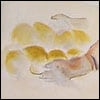
When no one was in the synagogue, he brought in the loaves under his cloak. He prayed that G‑d should look upon his offering with favor, and eat and enjoy the lovely, freshly baked bread . . .
|
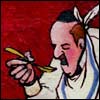
Ettel burst into tears as soon as she entered the famous scholar's room. She had nine sons, eight of whom were both dedicated and successful in their Torah studies. But she was upset about Moshe-Noach, her fifteen-year-old
|

He was perched on a white steed, accompanied by an entourage of soldiers. He wore a flashy uniform, and a glossy medallion, indicating his high rank, hung from his neck...
|
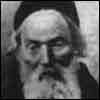
The rabbi interrupted the narrative and said, "I don't know what the Chafetz Chaim said to that student. I
only know that they were together for a few minutes. I would give anything to know what he said to the boy..."
|
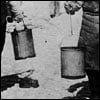
After completing the circumcision, as he dipped his finger in the wine to place a drop in the baby’s
mouth, the Chatam Sofer called out: “When wine goes in, secrets come out.” Seventy years were to pass before the significance of the great sage’s words would be revealed.
|

The doctor may have been taken aback... But actually, he wasn't mistaken.
|

It was a drastic move, but they felt they had no choice. They fasted and recited Psalms all day. Evoking ancient Kabbalistic formulas, they asked to be given a sign that night in their dreams.
|
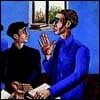
One day a rich and learned Jew came to one of the great European centers of Torah learning to search for a fitting match for his wise, pious and beautiful daughter.
|

A carriage pulled up in front of their door, and a distinguished-looking man alighted. No one knew who he was, but it was obvious from his appearance and deportment that here was a true Torah personality.
|

Poor brides lacking the requisite necklace had been known to weep for shame on their wedding days; some even ran away so as to avoid the embarrassment.
|

Finally, Reb Yehoshua set a price of 25 Napoleons—a sum that would support a family for two years. Surely, no one would be so foolhardy as to pay that kind of money for a horse . . . !
|
Upon hearing the verdict of the beit din, Rabbi Shlomo Zalman turned pale. Never in his life did he imagine that he would be required to take an oath in court!
|

The squire asked Shmuel to bring the priceless diamond he had inherited from his parents. All the guests waited breathlessly to behold this rare, precious gem . . .
|

A new pasha came into power as ruler over Hebron, and he was a Jew-hater. He lost no time in introducing new edicts against the Jewish community . . .
|

When she saw me, she began to cry and plead with me to rescue her. Apparently, these merchants had kidnapped her and were planning to sell her as a slave. I paid full price for her, brought her to my house, and raised her as if she were my own daughter.
|

Freezing and desperate to finish the burial, the funeral party turned onto the forbidden street . . .
|
|
The man was horrified. 'Please believe me,' he pleaded, 'I paid your saintly father a few days before he passed away...'
|
|
This is a story about three worthy Jews: One was a wealthy man, one a Torah scholar, and the third a deeply G-d fearing Jew…
|
|
|
|

The queen demanded that all Jews were to be expelled. How would they be saved?
|

"That night I could not sleep. Early in the morning, I returned to the store to witness with my own eyes how G-d would help."
|


Sort By:
Programs