

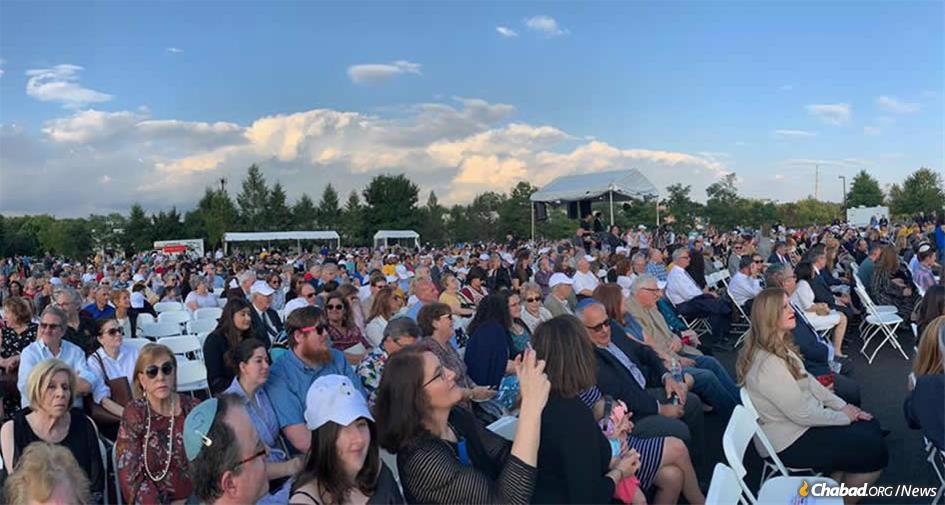
More than 3,000 visitors were expected to attend the grand opening and dedication ceremony on Monday afternoon at LifeTown, a 53,000-square-foot center in Livingston, N.J., that promises to redefine the treatment landscape and the principle of community inclusion for people with special needs, in addition to their families, and professional and volunteer caregivers.
The following article on LifeTown was first published on Chabad.org on Aug. 26, 2019.
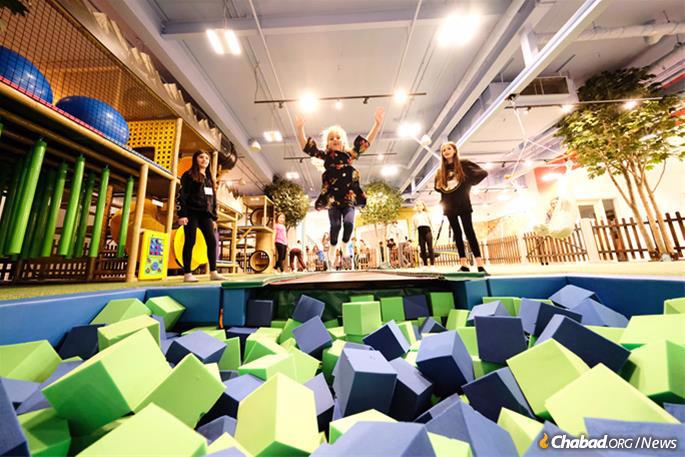
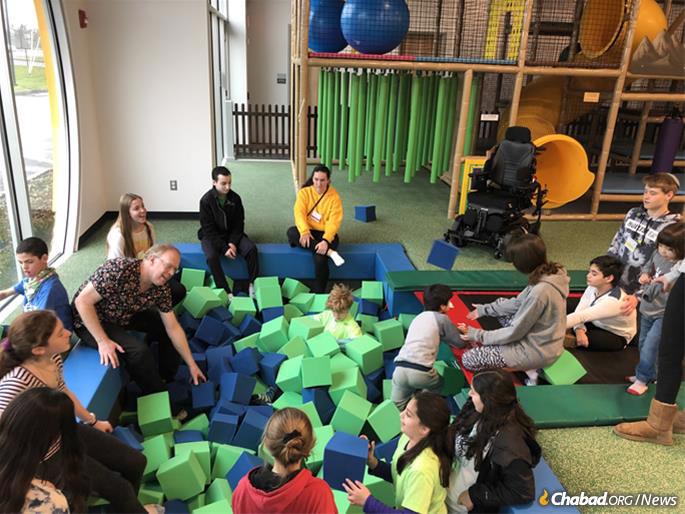
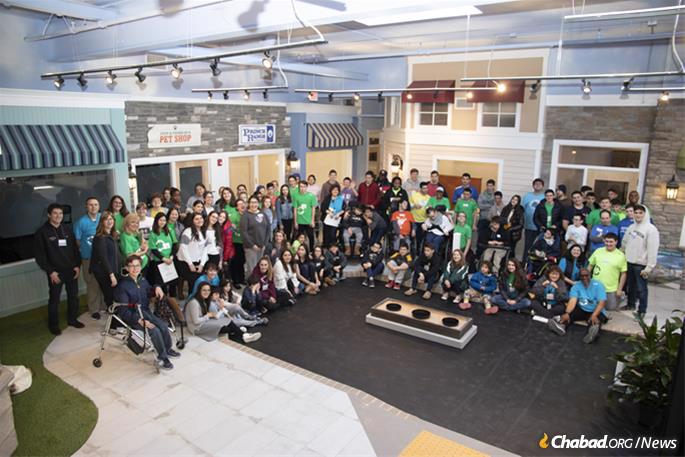
On the morning that the 53,000-square-foot LifeTown center first opened its doors in December 2018 in Livingston, N.J., Jason Campbell, its therapy director, found himself in the complex’s manicured indoor park. He watched as a dozen or so children with special needs played together with their volunteer teen buddies.
“This is the best therapy,” he observed. “It is even better because there are no therapists working with the kids. It’s just real life.”
Designed with individuals of all ages and abilities in mind and using the latest technology, simulating real life in a safe and accessible environment is precisely the goal at the $18 million LifeTown, which celebrates its grand opening and dedication ceremony on Monday, Sept. 9.
Perhaps LifeTown’s most striking feature is its extensive attention to detail. A project of Friendship Circle of New Jersey, each room, hallway, program and activity in the sprawling complex is designed to meet the wide range of needs of the various communities it serves.
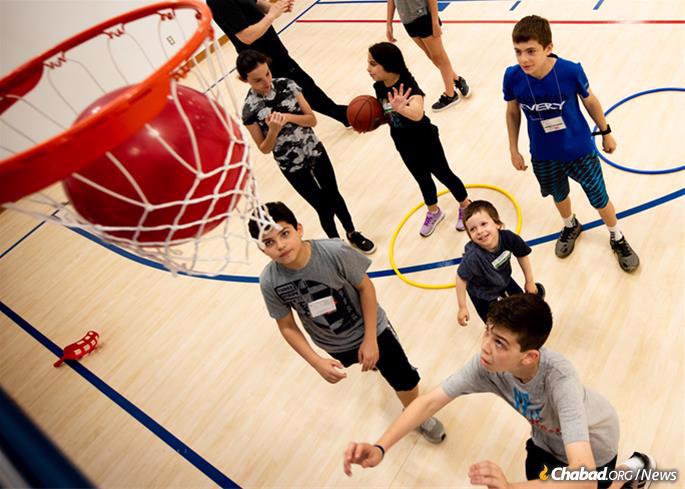
There’s an aquatic center with a zero-entry pool, the water temperature calibrated with the room’s exact temperature in order to ease transition into the water for those with certain sensitivities. Similarly, the center’s gym is equipped with sound-absorbent walls and ceiling. The LifeTown experience extends to the hallways and corridors, where planning decisions included providing soothing, interactive music; large windows with natural light; and colorful stripes on the walls and floors, leading participants from the map to a specific room. Even the colors, primary but not childish, taking into account sensitivities of people with autism, were carefully chosen in consultation with experts in the field.
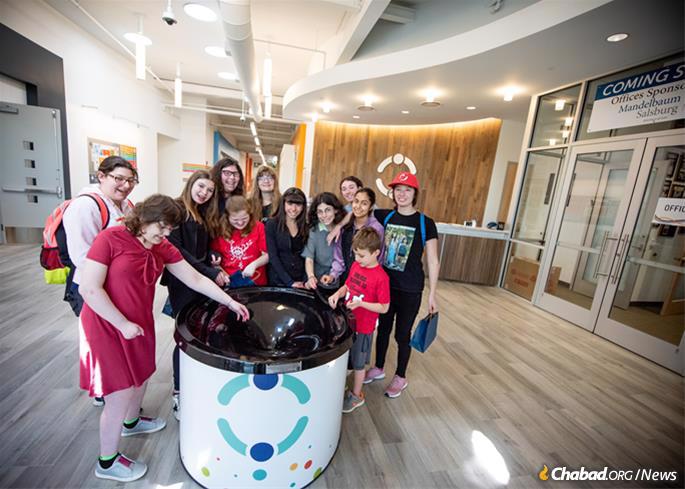
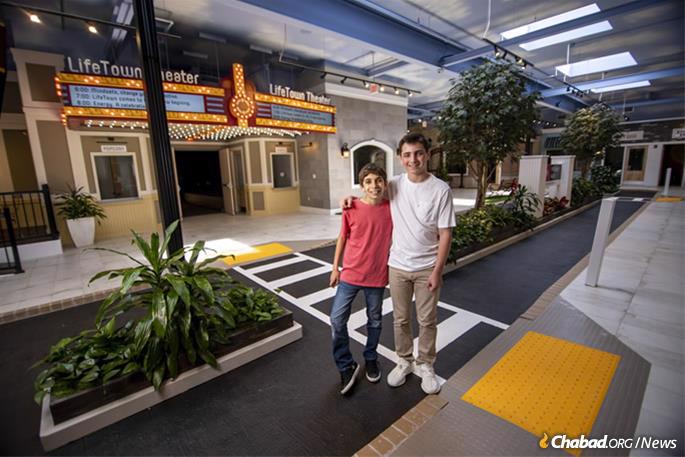
The centerpiece of Life Town is the “LifeTown Shoppes,” an indoor town square with streets, traffic lights, a park, sidewalks and stores, and even a coffee shop and bookstore open to the public. Participants gain valuable independent living skills as they navigate the 11,000-square-foot Shoppes. The real-world experience of the Shoppes reinforces classroom skills learned on such topics as budgeting, problem-solving, interpersonal communication and time management.
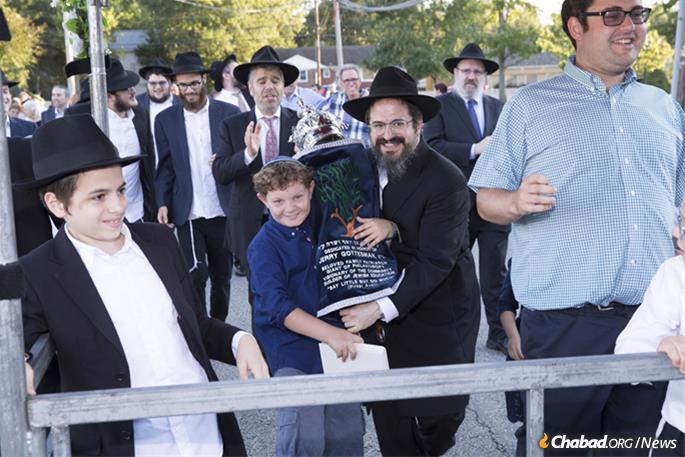
The roots of the project began 19 years ago, when Rabbi Zalman and Toba Grossbaum founded the Friendship Circle with five participants in their home in Livingston, N.J. The Chabad-Lubavitch emissary couple’s desire at the time was to serve people with special needs, and they hoped to help change the mindset of the communities in which these children and adults lived. Today, the national special-needs inclusion world looks towards their Livingston center as an example of how to do this successfully, and top-tier national universities are dispatching academic researchers to measure and study LifeTown’s impact. The Grossbaums’ work is seen as a model for how best to bring people with disabilities and the larger community together in full-fledged partnership.
All along, first for the Grossbaums and then their ever-growing circle of staff and volunteers, the focus has always been on meeting the needs of each and every individual whom they encounter. In this the work of the Friendship Circle and its LifeTown is guided by the vision of the Rebbe, Rabbi Menachem M. Schneerson, of righteous memory. During a time when special needs were not understood well by society, the Rebbe stressed the enormous capabilities of such an individual, and their own unique needs.
In response to a 1979 letter from a doctor at a Child Development Center in a Brooklyn hospital asking the Rebbe for guidelines regarding the care and education of people with special needs, the Rebbe noted that one must first make the essential observation that “it would be a gross fallacy to come up with any rules to be applied to all of them as a group. For if any child requires an individual evaluation and approach to achieve the utmost in his, or her, development, how much more so in the case of [these individuals.]”
A year later the Rebbe wrote a letter to a groundbreaking Jewish community conference on the developmentally disabled held in New York, where he noted that he did not like the term “retarded,” as was commonly used at the time, but rather preferred “some such term as ‘special’ people, not simply as a euphemism, but because it would more accurately reflect their situation, especially in view of the fact that in many cases the retardation is limited to the capacity to absorb and assimilate knowledge, while in other areas they may be quite normal or even above average ... ”
“The Rebbe’s pioneering vision of inclusion was a guiding inspiration, something we needed to do,” says Zalman Grossbaum.
In LifeTown, that vision has become a reality.

A Young Couple’s Focus on People With Special Needs
When the Grossbaums arrived in Livingston in the summer of 1996 to serve as Chabad emissaries, they immersed themselves in developing Jewish educational programs and building relationships with educators in the area’s nursery schools, Hebrew schools and day schools under the auspices of the Rabbinical College of America.
They learned early on that New Jersey has the highest rate of autism in the nation, and that Essex County has the greatest concentration of people with special needs in the state. Due to its proximity to New York City and the therapeutic and educational resources it offered for people with special needs, parents had moved there from around the country. In addition to running regular Chabad programming, Toba Grossbaum spent the couple’s first year in Livingston teaching at the Joseph Kushner Hebrew Academy in a typical Jewish kindergarten class. The next year she moved on to teach Jewish studies at the Sinai School, a program which the Kushner Academy hosts for children with a wide range of learning and developmental disabilities and other special needs.
“The experience touched me,” Toba recalls. Toba, who grew up in Michigan, was simultaneously hearing about Jewish children with special needs from Bassie and Rabbi Levi Shemtov, the Detroit-based founders of the Friendship Circle. “Everyone in Michigan was buzzing about Friendship Circle, which had started to blossom,” she says. “The Shemtovs tried to convince us to take the dive and open something similar here.”
Meanwhile, her husband had recently seen some of the Rebbe’s powerful correspondences[1] on the subject, and was moved to do something in his own community. Toba agreed and said, “We will do it on one condition—that we will never say ‘no’ to any family.”
Their decision would forever alter the development of programs and services for people with special needs and their families in New Jersey—and catch the attention of a diverse group of people and organizations across the nation and around the world.
Early Successes for Friendship Circle
The Grossbaums launched Friendship Circle in Livingston in October 2000, with five participants and 20 volunteers and quickly grew to serve 30 families with the support of 90 teen volunteers. The core of the Friendship Circle program pairs teenage volunteers with children with special needs for weekly visits. In the early days of the program, the Grossbaums themselves drove the volunteers to visit program participants.
The size and scope of the challenges soon became apparent to them. “We asked a group of parents to come to a feedback meeting in our home,” says the rabbi, who notes that his wife’s wicker desk was at the time serving as the Friendship Circle office. “One parent said, ‘Whenever we approach another organization about our 9-year-old daughter with special needs, they always say what they can’t do, and that she doesn’t fit the criteria, and that they are maxed out, but this is the first time people asked us what we needed!’”

Lori Saunders clearly remembers the day 20 years ago when she first spoke with Toba about her 8-year-old son Avi, who became one of the founding Friendship Circle participants. “People would stare at us on the bus and say, ‘Discipline your child!’” Lori recounts. “We couldn’t go anywhere. Even in shul, people would look at us. It was isolating. It was hard. It was depressing growing up with friends with typically-developing kids.”
Back then Saunders purchased cards from a local autism group, which were meant to be handed out to people; they read, “My child has autism. Please try to understand his behavior.”
Then she met Toba, and she never handed them out.
“At our very first meeting, Avi was banging on the bookcases and turning the lights on and off,” remembers Saunders. “It’s fine, don’t worry about it” Toba responded. “Toba told us about the Friendship Circle program they were bringing to Livingston. Little by little, they started laying the groundwork and it became this enormous program that paired typically developing young adults with children of differing abilities.
“Friendship Circle changed how people viewed people with different abilities,” Saunders continues. “I no longer felt embarrassed or ashamed. Now there is just this embracing of children, young adults and adults of all abilities. They get to see people with lives different from their own. Friendship Circle is the most incredible program with the most incredible, caring, loving, genuine people you could ever imagine knowing. We are truly blessed.”

Learning about the concrete challenges parents experienced, and now witnessing for themselves the sheer volume of families with children on the autism spectrum, the Grossbaums doubled down.
They installed a permanent ramp to their home so that they could invite anyone to their family Shabbat or holiday meals. Lauren Jacob-Lazer and her husband Adam are among the Grossbaums’ regular Shabbat guests, coming with their 8 month old and 6-year-old twins, one of whom, Benjamin, has cerebral palsy and thus has limited mobility and some difficulties with expressive language.
Through Friendship Circle’s Friends at Home program, Benjamin gets regular visits from teen volunteers. “Benjamin has a lot of teenage girlfriends,” Jacob-Lazer says playfully. “Two girls come over a couple of times a month to hang out with him, to keep him occupied and content and give us a few minutes to do things around the house.”

Today, more and more area teens are volunteering for the Friendship Circle, and Jacob-Lazer says many of her friends have children who volunteer or raise money for the program as a bar or bat mitzvah project.
A key to Friendship Circle’s success is the dedication of its volunteers. Like Avi, Eric Helwell, today 26, has also been involved with Friendship Circle nearly from the start. He joined in 2001 and is still in touch with his buddy of 17 years.
“Ike Newman calls me every Friday before Shabbos—we are very close,” says Helwell. The two met when Newman visited Helwell as part of the Friends at Home program. Today Helwell plays basketball in LifeTown’s league, and himself volunteers to help with mailings once a week.
Looking back at the years of participation with Friendship Circle, Helwell’s mother, Susan, praises the Grossbaums’ commitment saying, they’ve “always been there in times of need.”
Watching the Children Grow, Planning Next Steps
As the Grossbaums continued to watch Saunders and Helwell and so many others on the spectrum grow up, they considered how Friendship Circle can further assist people with special needs, their families and the community.
“By then we understood the numbers, the needs, the responsibility, and we began to think on a larger scale,” Zalman Grossbaum explains. He and his wife began to imagine a state-of-the-art destination which would provide recreational, educational, therapeutic and social opportunities for children, teens and adults with special needs, their families and the larger community. They knew about LifeTown in Detroit, which the Shemtovs had built in 2006, and had visions of expanding on this concept.
Slowly, plans for LifeTown Livingston began to take shape.
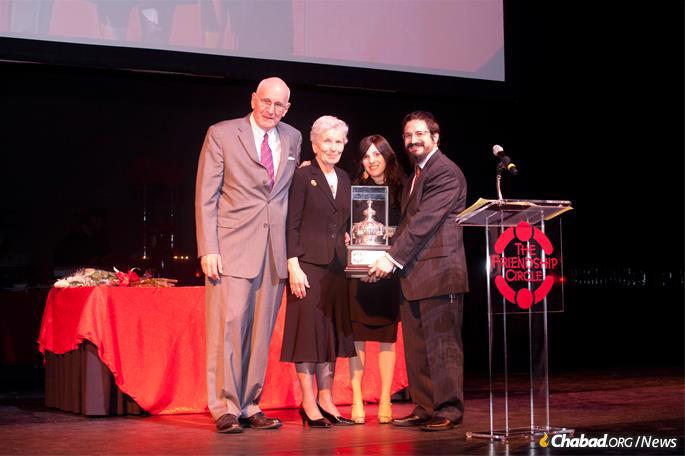
Some of the major donors to the $18 million LifeTown project are families who have been involved with Friendship Circle for years, including Seryl and Charles Kushner, and Paula Gottesman and her late husband Jerry Gottesman, after whom the building will be named. The indoor park was funded by a $500,000 grant from the Healthcare Foundation of New Jersey. Numerous individuals and businesses throughout the community have also donated to LifeTown.
The community eagerly awaited the opening of LifeTown and followed its progress through regular posts and photos on the LifeTown website.
Avi Saunders, today 30, couldn’t wait for the day LifeTown would open. “I feel at home there,” he says. In fact, Saunders looks forward to doing jobs at LifeTown, working at the office copy center. “He lives and breathes LifeTown,” adds his mom.
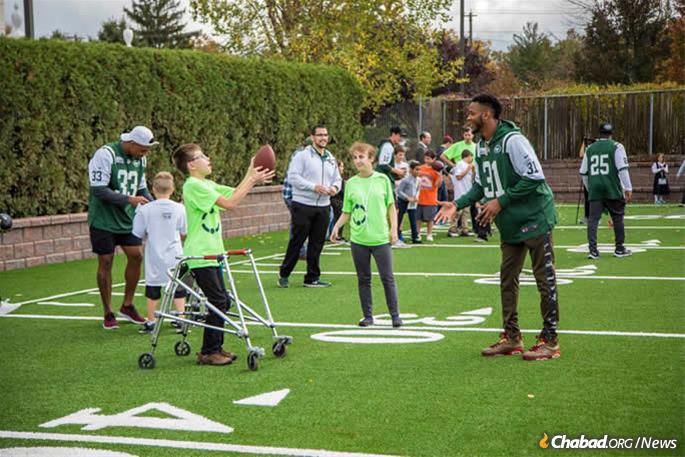
“The goal of LifeTown is to make the world a welcoming place, integrating people with special needs, including autism, into daily life,” Grossbaum explains. “LifeTown is a model for people with special needs and all kids—when they play together on the playground, for example, they naturally come together and don’t notice differences.”
Today, LifeTown hosts all of the Friendship Circle programs, where teen volunteers and people with special needs regularly participate in inclusive programming. Friendship Circle’s team has also grown to include more Chabad rabbis and their wives, staff, active lay leaders and an always-expanding roster of volunteers.
“These are the people who really make all of this happen today,” Grossbaum says. “We have a dedicated team of angels who work here day-in, day-out. None of this could be possible without them.”
The Center
Participants begin their visit at LifeTown by entering the village called LifeTown Shoppes. There they can withdraw money from Regal Bank. They can choose to travel in mini Audi cars (sponsored by DCH Millburn Audi) and learn to follow crosswalks and traffic signals. They then have opportunities to visit sometimes hard-to-navigate, sensory overloaded places such as a full-service movie theater (with kosher popcorn!), RWJ Barnabas Health medical center, a ShopRite grocery store, pet shop, book store and hair salon.
Participants also obtain real-world job training through such work opportunities as stocking shelves in the grocery store, serving snacks, making copies and laundering towels at the laundromat, for use in the aquatic center. Grossbaum proudly points out that “every job is a real job with an end purpose and no make-believe work.”
Parents and the public are welcome at the Words Bookstore—founded by Ellen and Jonah Zimiles, parents of a child with autism—and the nearby coffee shop where they can sip a cup of coffee, browse some books, have a business meeting, or socialize with other parents. There’s also a private parents lounge just for family members.
“I have never seen anything like it,” says Dr. Herbert Cohen, director of the Children’s Evaluation and Rehabilitation Center at the Albert Einstein College of Medicine in New York, and director of the school’s University Center for Excellence in Developmental Disabilities. Cohen has worked in the field for 54 years. “The facility is incredible. They do life-skills training plus anything you can imagine for children and adults. I don’t think there is anything close to it. The potential is enormous.”
What surprises Cohen most is the sheer number of volunteers.
Dr. Nancy Kirsch, professor and community director of the doctor of physical therapy program at nearby Rutgers University recently brought a group of Rutgers faculty from various disciplines on a tour. “They knew nothing about Friendship Circle and Chabad and were blown away,” she explains, noting that they “were enamored with the sensory awareness, and architectural barrier awareness that went in to the planning—they were so excited—like kids in a candy store.”
While Friendship Circle is geared towards the Jewish community, LifeTown’s programs, including respite, after-school activities, sports leagues, and educational programs, are nonsectarian and open to the entire community. There may be potential for collaboration and training between LifeTown and Rutgers and Grossbaum is already thinking several steps into the future. He is exploring ways to more effectively incorporate technology in to LifeTown and is looking into ways to take participant IEPs (Individualized Education Programs) and make them into an interactive platform.
Despite all the bells and whistles, the Grossbaums never lose focus of the core purposes of LifeTown, to fully integrate people with special needs into the community and society at large. With a birthday center and a coffee shop, family volunteer or other community volunteer opportunities, LifeTown is itself an integrated center. While children can grow to obtain the life skills they need, thousands of community members will have the experience of interacting with them so that such a thing becomes second nature to them.
In his 1980 letter to the conference on disabilities, the Rebbe wrote that no less important than the therapies and programs which needed to be developed, people with special needs must be given the same opportunity to connect with their Jewish identity as every typically abled person.
“The actual practice of Mitzvos in the everyday life provides a tangible way by which these special people of all ages can identify with their families and with other fellow Jews in their surroundings, and generally keep in touch with reality,” the Rebbe wrote. “Even if they may not fully grasp the meaning of these rituals, subconsciously they are bound to feel at home in such an environment, and in many cases could participate in such activities also on the conscious level.”
“Every neshamah [soul] has a unique personal mission to fulfill in this world,” says Grossbaum. “Even as the programs have grown, that has remained at the heart of Friendship Circle and LifeTown.”



thank you