

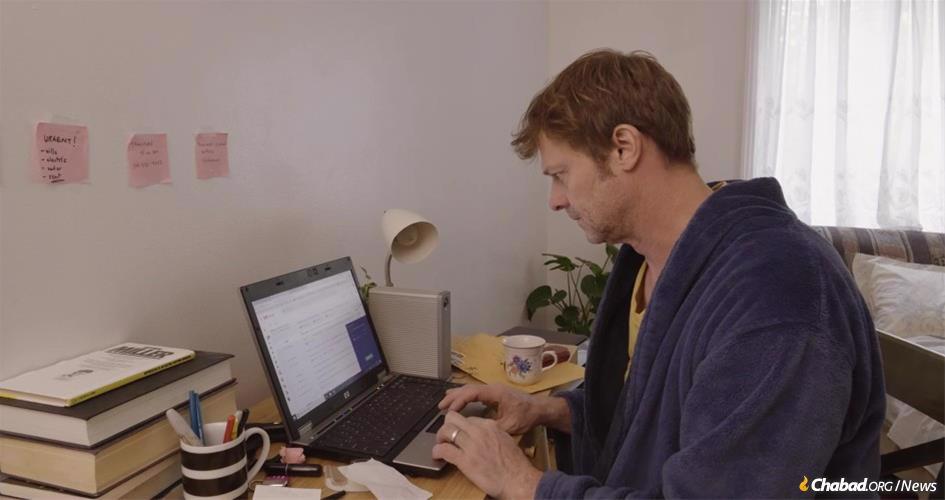
Amber is a young Canadian mother who has spent much of her life dealing with the wreckage caused by alcohol and drugs. After residing in an in-patient rehabilitation center during the first part of 2019, she was connected with Chabad Lifeline—a Montreal-based center that provides services to people in recovery from addictions of every kind. She started going to meetings and participating in drug and alcohol testing with the help of the organization, expressing her gratitude to Chabad Lifeline for giving her a source of structure as she heals and works to get her children back.
When the coronavirus pandemic hit, Amber was confident that Chabad would still be there to support her in her efforts, even if there wasn’t a physical meeting space they could access to be together. “I wasn’t worried they were going to vanish because you just know that they care too much about people’s well-being; we knew they would find some way,” she said.
And so, it went from phone calls the first week to check in to meetings on Zoom, where her regular meetings are now available to her. “The great thing about Chabad Lifeline,” she says, “is they really keep tabs on you. They make you become accountable.”
Chabad centers around the world—particularly those that primarily serve the most vulnerable populations—have had to adapt to serve their communities during the coronavirus pandemic, and Chabad Lifeline, which is located on the grounds of Jewish General Hospital in Montreal, has been an exemplar of such proactive flexibility.
The center has pivoted from working with clients in-house—they’ve worked out of a 100-year-old home in collaboration with the hospital for about a decade now—to using the phone and online resources such as Zoom to make sure that people can continue being connected and uplifted during these times of social distancing.
Thanks to a recent decision to go paperless, the center was able to operate without missing a beat. Instead of interruption, Chabad Lifeline has become even busier in a sense, said Rabbi Benyamin Bresinger, director of Chabad Lifeline, as people who wouldn’t normally make it to physical meetings attend via Zoom, Skype or by phone.
The rabbi and his wife, Karen, who serves as Chabad Lifeline’s clinical director and family counselor, have offered a slew of services to the community since 2010, from drug awareness and prevention programs in area high schools to meetings and outreach for adults. Now, they’re reaching their current client base and also reaching out proactively to past clients who might need additional support.
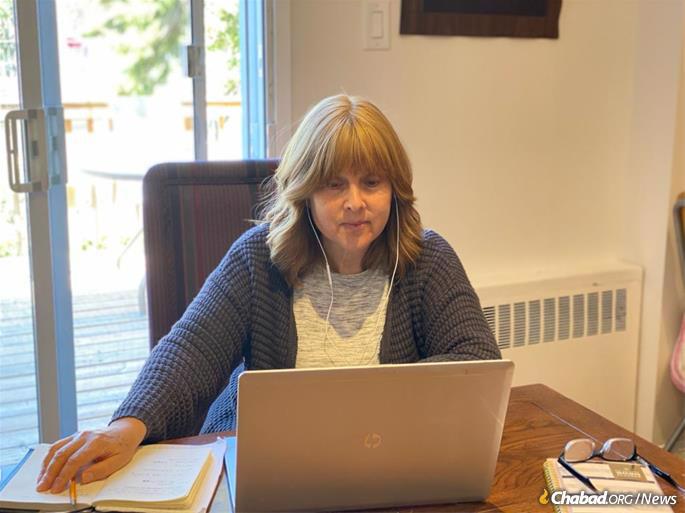
“It’s extraordinary times now,” he said, adding that reconnecting with past clients has been a way to remind them that they’re not alone. “With addiction, the window of someone who’s going to come in for help or accept help is very short. Today, it seems like the window of windows because people are at home; they’re having to face the reality of the chaos they’re bringing to their families. Now everyone’s there, so there’s that window where people are really ripe for help, coming for help.”
Chabad Lifeline transitioned its files online with the help of Mike Flinker, who learned about the organization when his daughter was volunteering at the facility. A successful businessman who sold his company in March 2016, he met with the rabbi at his daughter’s urging, and six months later, they had a system up and running to manage intake and records.
Though it had previously been cost prohibitive, with Flinker’s support and help from a nearby professor at McGill University, therapists now have access to all of the information they need to connect with clients remotely. The project was completed about a year ago, and its timing couldn’t have been better, noted Flinker.
“By digitizing the whole process, the [clients] never lost contact with the therapist during this crisis,” he said. “And they’ve been able to see more patients than ever as a result of their efficiencies. It’s one of the best projects I’ve ever done.”
Flinker, who was originally motivated by the idea of improving efficiencies to better connect therapists and clients, as well as reducing paper files to give clients more anonymity, said he and wife, Dr. Marcia Gillman, never imagined a scenario like COVID-19, but that they are relieved that the center has the software in place.
“They’ve got access to all of the files. All of the files are online now, and they’ve got all the information on the clients, and they can remain in contact with them,” he said. “They’ve done some tremendous work, and continue to do some tremendous work as a result of having a system in place.”

‘A Safe Space and a Beacon of Hope’
Amber, who is attending Chabad’s Zoom meetings at noon on Tuesdays with an option to attend on Thursdays as well, said she likes being in a space that’s so comfortable and relatable. Chabad keeps the room open after the meeting so people who joined can chat.
She said she’s heard experts explaining what a trying time it is for people who suffer from addiction because there aren’t meetings they can just choose to attend; instead, they’re stuck at home, have access to alcohol and can start drinking earlier, she said. “With Chabad, you can just contact them; they guide you where to go, what meetings to go to. Sometimes, you just need that simple reminder and someone to talk to, and it’s always available.”
Though she acknowledged that she’s not “so tech-savvy,” staying sober is important enough that she’s willing to go online to help maintain it, she said. Having a recovery program supporting her at home is meaningful, adding “it’s not just about waking up and staying sober; you have to do the work,” she said.
Even after the pandemic eventually passes, she said, she wouldn’t be surprised to see the online element of support continue. “I am sure a lot of people are enjoying Zoom more. It’s easier, transportation is easier—I’m sure they’re going to stick around.”
Jake first connected with Chabad Lifeline in 2018, when someone suggested it as a good place to start as he sought to build a foundation on top of his new, sober lifestyle. “The counselors are great,” he said. “It was accountability that was very important to me.”
He went on a regimen of testing, meetings and accountability, which gave him structure in a safe environment. “It was a place for me to go and feel very safe,” he said. “For me, Chabad is that, in particular—that place, like a home away from home.”
The Chabad center always made him feel welcome, he mentioned, and over time, he was ready to step back from the regimen he’d been on, checking in mostly as he hit different sobriety milestones.

Two months ago, he felt that he wanted some extra support, and now he’s in more constant contact with the center, this time Zooming with familiar faces and talking on the phone. And though he wouldn’t say he prefers Zoom meetings to in-person ones, the way the online sessions are set up is very comfortable, familiar and inviting. “They’ve done a good job transitioning that online,” he said.
He noted that he has found the uncertainty of the coronavirus and job security in the current environment unsettling, which prompted him to change. So Jake decided to keep himself accountable and reconnect with the people who’d welcomed him in from day one. “Life’s a little bit different right now,” he said, referring to the masks, gloves and isolation superimposed on daily life.
Now he’s back to a regimen of meetings, albeit online, in addition to email and phone meetings. “It’s not the same as a meeting, where you get to look someone in the eye and shake their hand and say, ‘Hi, how are you?’ and ‘thank you,’ ” he said. “But I guess right now this is what we have, and it’s a good alternative.”
And when he called, he never doubted they’d be there. “Right now is an interesting time for everybody. I think it’s an especially hard time for people who struggle with addiction and mental health, and Chabad is not the type of place to shy away from a challenge like that,” he said. “These guys saved my life—they helped steer me onto a different path that’s more right for me, and it’s always been a safe place and a beacon of hope.”





Thank you for posting this article. We need to let kids know there are people who can help them without making them feel shamed and pushed away.